金刚石砂行业洞察:市场增长、制造技术与先进应用趋势
Author's Note
This article analyzes the development trends of the diamond grit industry based on manufacturing technology, market demand, application expansion, and industrial upgrading. It provides insights into diamond grit production processes, performance advantages, and future opportunities for global customers.
Abstract
Diamond grit is an important category of superhard materials widely used in diamond tools, abrasive products, precision grinding, mining equipment, and advanced manufacturing applications. With outstanding hardness, excellent wear resistance, high thermal stability, and reliable processing performance, high quality diamond grit has become a key material for improving machining efficiency and product quality.
Driven by the development of precision manufacturing, semiconductor technologies, new energy industries, and high-performance material processing, demand for premium diamond grit products with optimized particle shape, controlled particle size distribution, high strength, and consistent quality continues to increase.
The diamond grit industry is evolving from traditional abrasive material supply toward customized solutions, advanced manufacturing support, and high value-added applications.
1. Diamond Grit Industry Overview: Growing Demand from Modern Manufacturing
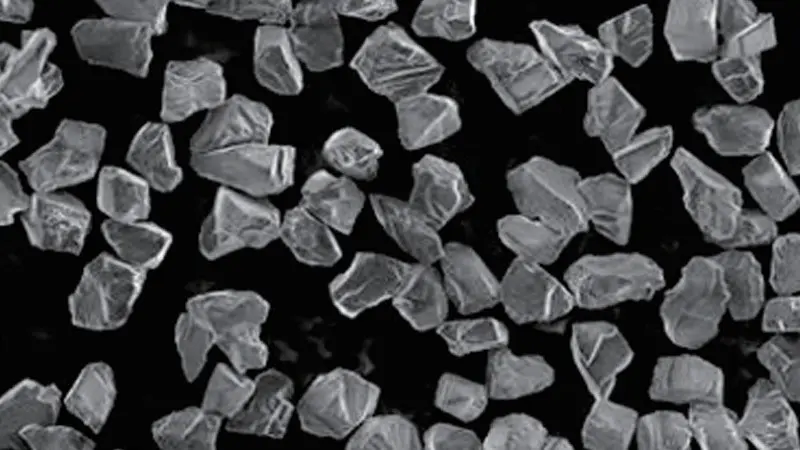
Diamond grit is produced from synthetic diamond crystals through advanced processes including crushing, shaping, screening, and precision classification. As a high-performance diamond abrasive material, it is widely used in manufacturing diamond saw blades, grinding wheels, drill bits, and other diamond tools.
Due to its exceptional hardness and wear resistance, diamond grit plays a critical role in processing hard materials such as granite, marble, concrete, ceramics, cemented carbide, and advanced engineering materials.
As customers increasingly require higher machining efficiency, longer tool life, and improved surface quality, diamond grit manufacturers are focusing on product consistency, customized particle sizes, and application-specific solutions.
2. Diamond Grit Applications Across Key Industries
Construction and Mining Applications
Diamond grit is widely used in construction and mining tools, including diamond saw blades, core drilling tools, and grinding wheels. Its high cutting efficiency and durability make it suitable for processing stone, concrete, and other hard materials.
Industrial Manufacturing Applications
In industrial manufacturing, diamond grit is used for grinding and machining high-hardness materials such as cemented carbide, high-speed steel, and precision ceramics.
Compared with conventional abrasives, diamond abrasive materials provide:- Higher grinding efficiency;- Longer service life;- Better surface finishing performance;- More stable processing results.
Semiconductor and Advanced Electronics Applications
With the rapid development of third-generation semiconductor materials such as silicon carbide, demand for high-performance diamond grinding and cutting solutions is increasing.
Diamond grit-based tools are used in wafer cutting, grinding, and precision processing applications where dimensional accuracy and surface quality are critical.
3. Diamond Grit Manufacturing Technology and Quality Improvement
HPHT Diamond Synthesis Technology
High quality diamond grit starts with superior synthetic diamond crystals. High Pressure High Temperature (HPHT) synthesis technology improves crystal quality, structural stability, and material performance.
Advanced Crushing and Shaping Technology
Modern diamond grit production uses optimized crushing and shaping processes to control particle morphology, sharpness, and self-sharpening characteristics.
Precision Screening and Particle Size Control
Accurate particle size distribution is essential for achieving stable grinding performance. Advanced classification and inspection technologies help diamond grit suppliers provide consistent products for different applications.
Purification and Quality Control
Professional diamond grit manufacturers implement strict quality control systems, including impurity analysis, particle size inspection, and performance testing, to ensure reliable product performance.
4. Future Trends of the Diamond Grit Industry
High-Performance Diamond Grit Development
Future diamond grit suppliers will focus on developing specialized products, including:- High toughness diamond grit;- High strength grinding-grade diamond grit;- High purity diamond abrasive materials.
Intelligent Manufacturing
Automation, digital production management, and intelligent inspection systems will help improve production efficiency, product consistency, and manufacturing reliability.
Green Manufacturing
Sustainable production methods, resource optimization, and recycling technologies will become important development directions for the diamond grit industry.
5. Conclusion:
The diamond grit industry is entering a new stage driven by advanced manufacturing, precision processing, and high-performance material demand.
Reliable diamond grit manufacturers and suppliers with strong production technology, quality control systems, and application expertise will play an increasingly important role in global manufacturing industries.
6.Frequently Asked Questions (FAQ)
Q1: What is diamond grit used for?
Diamond grit is mainly used for diamond tools, grinding wheels, saw blades, drilling tools, and precision processing applications.
Q2: How is diamond grit manufactured?
Diamond grit is produced through synthesis, crushing, shaping, screening, and classification processes.
Q3: How do I choose the right diamond grit size?
Selection depends on processed materials, tool design, required surface quality, and machining conditions.
Q4: Can diamond grit be customized?
Yes. Particle size, strength, and morphology can be adjusted according to specific application requirements.